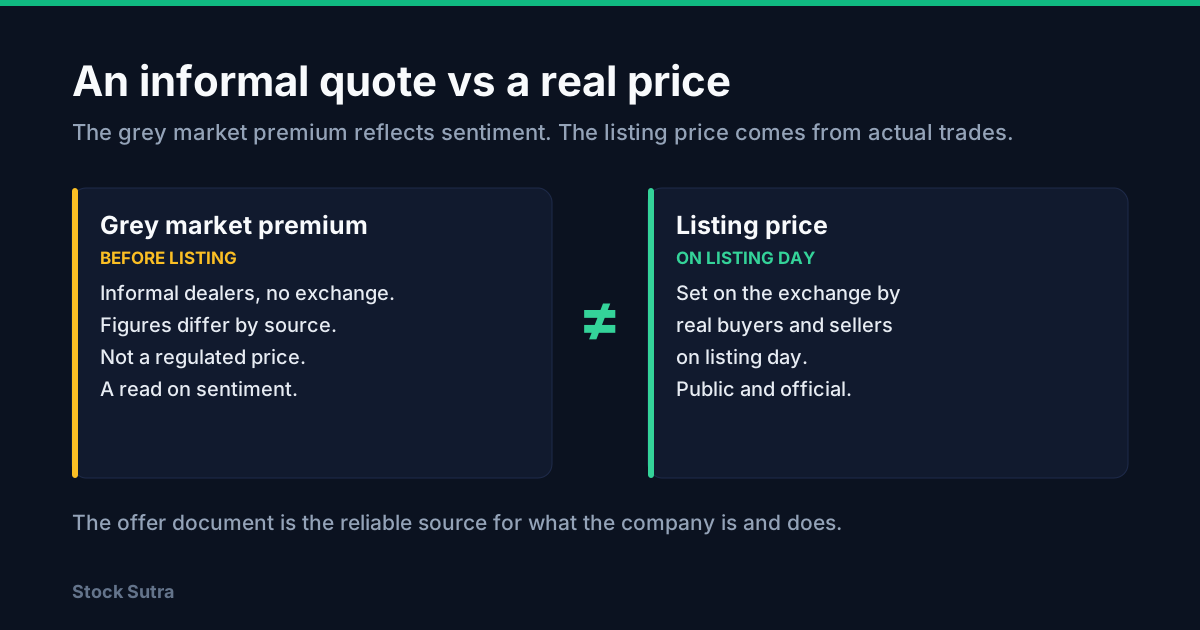
The grey market premium, usually shortened to GMP, is the amount by which shares of an upcoming IPO are being traded informally above or below their issue price before they list. A GMP of ₹20 on a ₹100 issue means that, in unofficial dealings, people are paying about ₹120 for the shares that have not yet been allotted.
It is widely quoted in the days around an IPO, and it is widely misunderstood. It is a rumour-grade price from an unregulated market, and treating it as a forecast is where most of the confusion starts.
Where the grey market is
The grey market is an informal network of dealers and brokers who agree to buy and sell IPO shares, or the right to receive them, before the shares exist in the exchange system. There is no exchange, no clearing corporation and no regulator behind it.
That has three consequences:
- There is no official record. No exchange publishes these prices, so every GMP figure you see comes from a website or a message group quoting what dealers say.
- There is no guarantee of settlement. A deal in the grey market is a private promise. If the other side does not honour it, there is no exchange mechanism to enforce it.
- There is no investor protection. Dealing in this market is not something regulators endorse, and the numbers are not subject to any disclosure standard.
What a GMP figure is made of
A quoted GMP reflects the opinions of the few participants who are dealing at that moment. It moves with their sentiment, with news about the market, and with how hard the issue is being promoted. In a quiet market with a few small dealers, a handful of trades can move the number.
Because it is thin and unregulated, it can also be influenced. A figure that looks like consensus may be nothing more than a few traders talking up a price. Anyone with a position in the grey market has a reason to want the premium to look high.
What GMP does not tell you
It does not tell you the listing price. The listing price is set by actual trades on the exchange on listing day, between real buyers and sellers. The GMP is one input that some of those participants look at, nothing more.
It does not tell you the company is good. A high premium says some dealers expect enthusiastic demand on listing day. It says nothing about the company's profits, debt, or competitive position. Companies with strong numbers have listed at a discount to the issue price, and weaker ones have listed at a premium, because short-term demand and long-term business quality are different things.
It does not tell you what happens after listing. Even when the grey market price and the listing price line up, nothing about either predicts where the shares trade in the following weeks or years.
It is not a price you can act on safely. Because the grey market sits outside regulated trading, there is no safe way for an ordinary applicant to use it.
Why people still watch it
It is a convenient, free number, and in a hot market it captures real excitement. Many news sites publish it for the same reason they publish other numbers that attract clicks. Understanding that it is an informal sentiment gauge, rather than a measurement, is enough to put it in proportion.
What to look at instead
The documents and data that are actually reliable for an IPO are the official ones:
- The offer document (red herring prospectus), which states what the company does, its financials, its risks and what the money raised will be used for.
- The price band and the valuation the price implies, set against the company's own earnings and its listed peers.
- The subscription data by category, published by the exchanges during the issue.
- The use of proceeds: whether the money funds growth, repays debt, or lets existing shareholders sell.
None of these predicts a listing-day move either. They are the information that exists, and the grey market is mostly a reflection of what people think of it.
Frequently asked questions
Is the grey market legal?
It operates outside the regulated market, and regulators have not endorsed it. It is not an exchange-traded market, and the figures it produces have no official standing.
Does a high GMP mean an IPO will list at a profit?
No. It indicates what some informal dealers expect, and listings regularly come in above or below what the grey market suggested.
Why do different websites show different GMPs?
Because there is no single source. Each site relays quotes from different dealers or groups, and the numbers also change through the day.
Can I buy or sell IPO shares in the grey market safely?
There is no regulated mechanism to protect you, and no guarantee that the other party will complete the deal. That is the central reason to treat the figure as information about sentiment only.
What is the most reliable thing to read before applying to an IPO?
The offer document. It is the legally required disclosure, and every claim in it is something the company and its advisers are accountable for.